Inspiring Through Education
Engaging future talent to build and sustain global digital infrastructure for the public good.


Shaping the Future of Subsea
The Foundation’s educational initiatives aim to inspire and prepare the next generation of subsea telecom professionals, whilst engaging the industry.
These programmes include the WAVE regional/local language symposia, which serve as an introduction to the industry, followed by the Global Digital Infrastructure (GDI) certificate, and culminating in the UNiGE postgraduate degree.
These initiatives, alongside online resources and academic partnerships, are designed for real impact.
WAVE Symposia
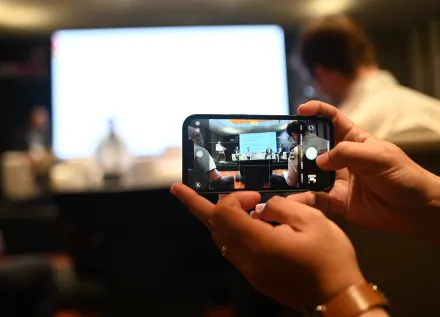
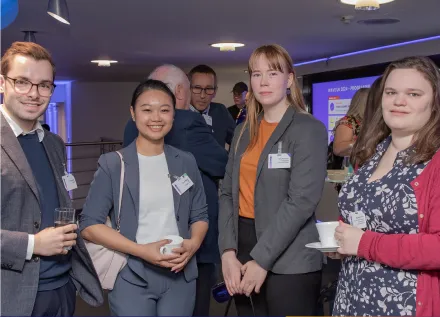
These regional/local language symposia -recently rebranded as WAVE - are planned andled by volunteers from across our industry,including many industry young professionals.
Global Digital Infrastructure
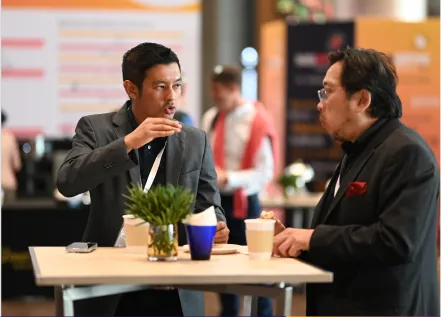
The first undergraduate certificate programmeto introduce students to the technical, economic,legal, environmental, and social dimensions ofthe global Internet infrastructure, including bothdata centres and subsea telecommunicationscables.
Master’s Level 2 in Digital Subsea Infrastructure (DSI)
The University of Genoa, in partnership with the SubOptic Foundation and Sparkle, is launching the II Level Master in Digital Subsea Infrastructure — the world's first postgraduate programme dedicated to submarine digital infrastructures.
WAVE Symposia
Inspiring the next generation of subsea telecom professionals
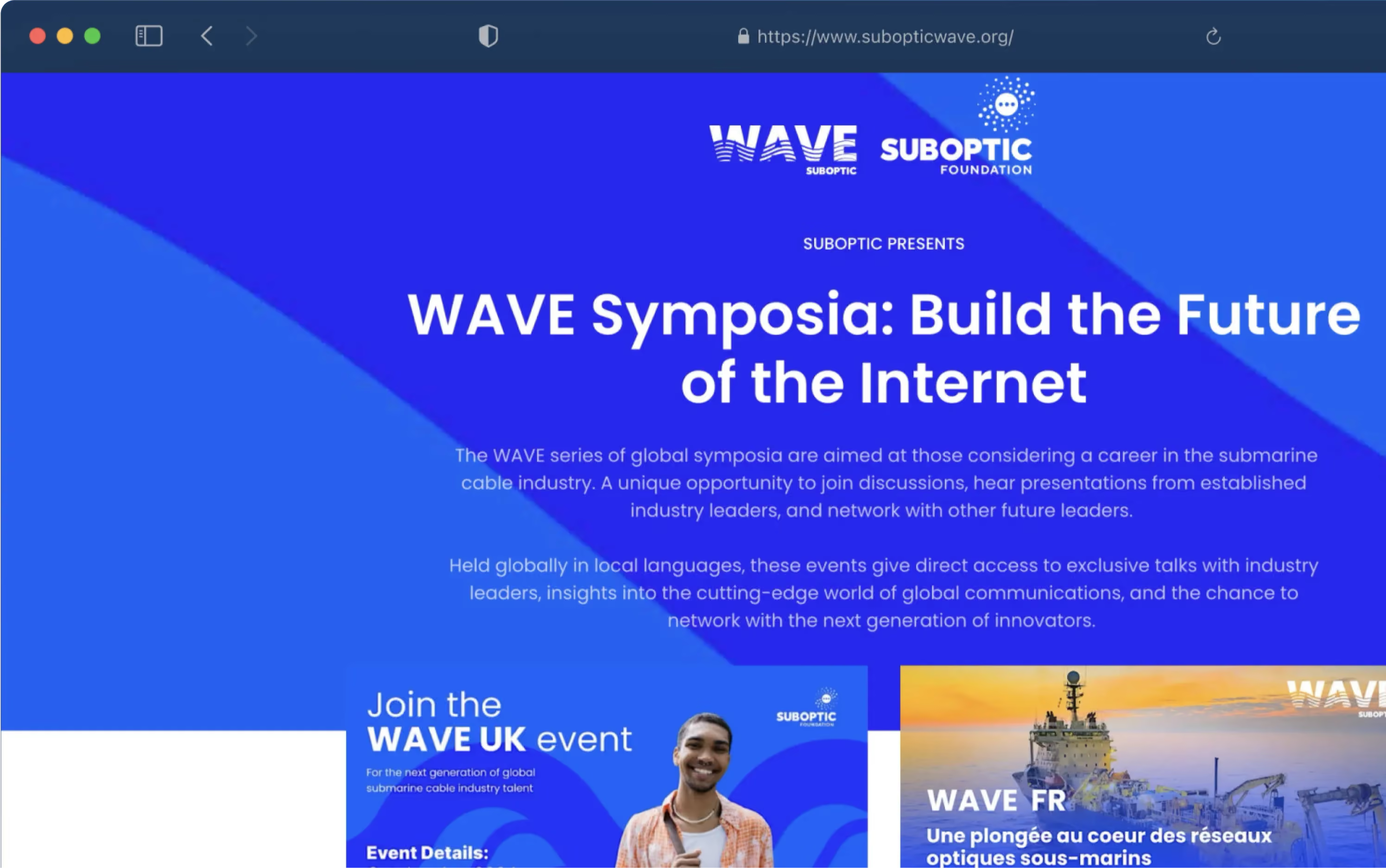
WAVE symposia are at the heart of the SubOptic Foundation’s mission to educate and inspire.
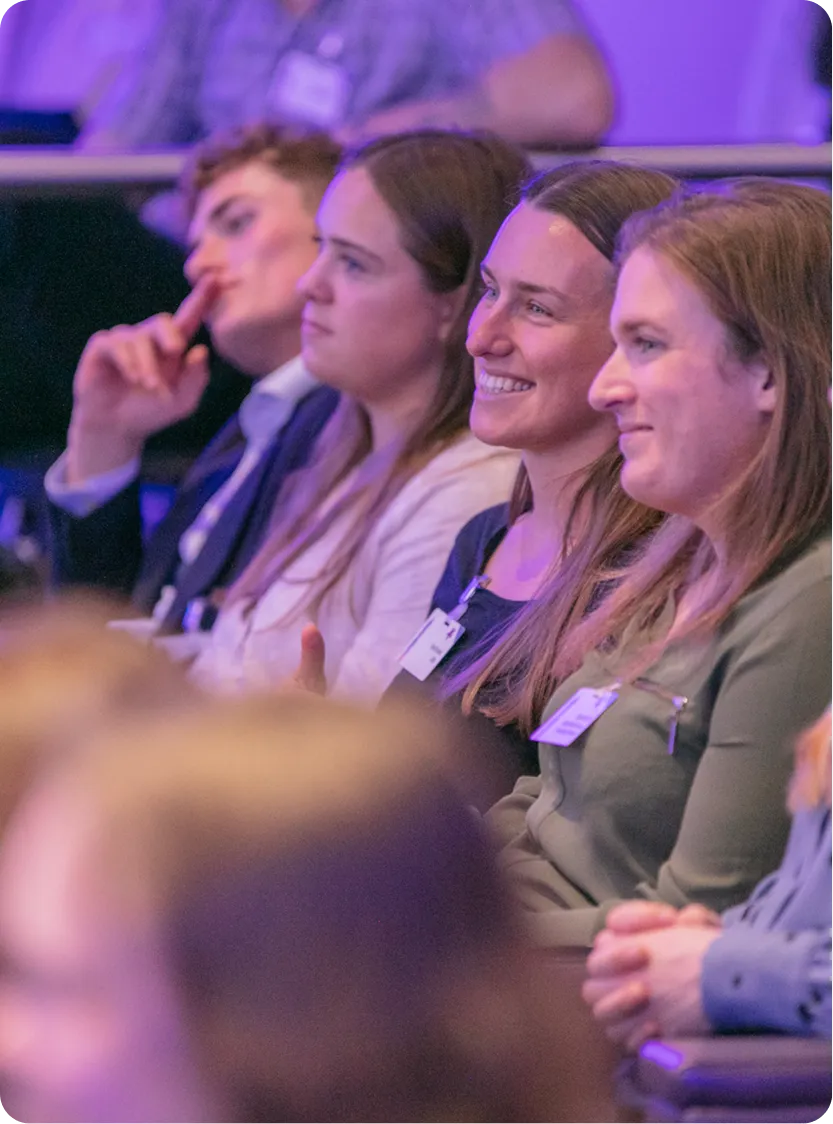
These regional and local-language events provide students and young professionals with their first introduction to the dynamic subsea telecoms industry.
Led by volunteers, including many emerging leaders, WAVE symposia showcases the collaborative spirit of our global community.
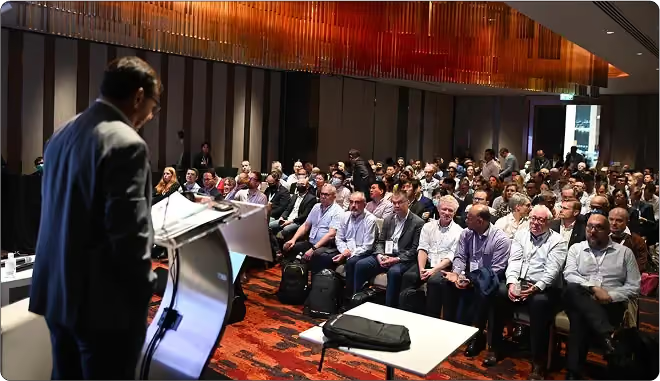
In 2024, WAVE events took place in Tokyo, London, Lisbon, and Paris, with live-streaming reaching hundreds worldwide. With support from our member companies, these symposia offer invaluable insights, networking opportunities, and career inspiration for the industry’s next generation.
Planning is already underway for 2025, with events scheduled in Egypt, Brazil, Uruguay, and Japan.


“Amazing! So glad it was such a success, and it was great to see some old friends as well! Thanks, Ed, for continuing to help us entice the next generation to join the industry!”


“Universally, when rushing off from events like these, I am energized by the engagement and passion from the early-career professionals and students that attend. Their questions were searching, their comments insightful, and I don’t mind admitting—I am in awe of how ‘sorted’ they are (I certainly wasn’t at their stage of career!). The arrangements were frictionless, the venue will be very hard to beat, and the support throughout surpassed any expectations. I think we collectively achieved something very, very good—led purposefully, as ever, by the Grand Uncle of SubSea (and erstwhile King of Co. Mayo), you know!”


“We all obviously would do most anything for you, but to also get to engage with next-generation talent was incredibly energizing! I’m always struck by their poise and thoughtfulness so early in their careers.”


“Thank you so much for organizing and including all of us. It was inspiring to see the enthusiasm and energy of the next generation, and I was grateful to contribute to that passion. Ed, your enthusiasm, vision, and passion for this initiative are inspiring.”


“Thanks for organizing such a great day. I was so glad you invited me to participate. I thoroughly enjoyed it, and it was wonderful to engage with the stars of tomorrow. The lineups, content, location, and organization for the day were flawless.”
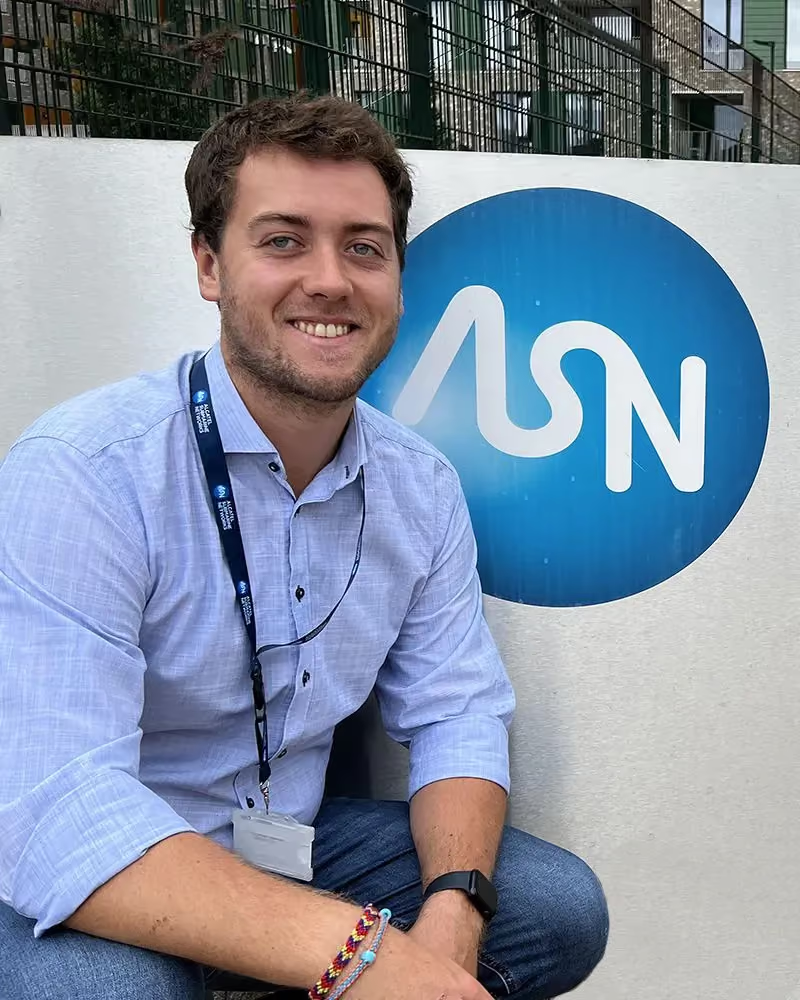

“It was a pleasure to be part of the event, and thank you for including me and ASN! We’ll definitely be back next time if you’ll have us!”


“Thank you for your kind words and for taking the time to express your appreciation. It was truly an honor to be part of such a successful and impactful event. Hearing the positive feedback and learning about the broad international reach was incredibly rewarding. A special thanks to Elaine for her excellent moderation, which made the discussion even more engaging. It’s fantastic to know that our contributions resonated with such a diverse and global audience, particularly with the next generation.”
Join the WAVE. The global symposia series is now live
Help to build the future of the internet

Certificate in Global Digital Infrastructure (GDI)

The SubOptic Foundation, in partnership with the University of California, Berkeley (UCB) and Infrastructure Masons (iMasons), proudly introduces the first undergraduate certificate programme in Global Digital Infrastructure (GDI).
This innovative programme explores the technical, legal, environmental, and social dimensions of the global internet infrastructure, including subsea telecommunications cables and data centres.
Designed for students from UC Berkeley and universities worldwide, the certificate offers a comprehensive overview of digital infrastructure, equipping participants with cutting-edge knowledge delivered by industry experts.
Missed our Open House? Watch to learn about the Certificate in Global Digital Infrastructure (GDI), the first undergraduate program of its kind. Hear from industry leaders in subsea cables, data centres, and digital infrastructure as they discuss why this field is essential, and how students can build careers in it.
The GDI Certificate is a powerful step in breaking down barriers to industry knowledge, equipping students and young professionals with the skills and insights needed to shape the future of global connectivity.”

Join Us
Start your journey to understanding and shaping the future of digital infrastructure: visit the UC Berkeley Center for New Media for details on how to apply.
The Programme
Digital infrastructure is the backbone of modern society, enabling everything from global communication to economic and social systems. Yet, its critical role remains largely invisible to the public.
This programme addresses a dual challenge:
- Industry Workforce Gap: Companies managing subsea cables and data centers are in urgent need of diverse, skilled professionals prepared to drive innovation and resilience.
- Public Awareness: As sectors increasingly depend on digital infrastructure, understanding its operations and vulnerabilities is crucial for sustainability and continuity.
Interdisciplinary Curriculum
Welcoming students from engineering, business, law, social sciences, architecture, and beyond. No prior experience in digital infrastructure or related fields is required.
Global Focus
Explore case studies and challenges from around the world, with a focus on subsea cables, data centers, and interconnection points.
Flexible Format
Courses are online, available synchronously and asynchronously, with some in-person options at UC Berkeley.
Project-Based Learning
Collaborate across disciplines to tackle real-world challenges, guided by UC Berkeley faculty and industry experts.
.webp)
The inaugural cohort begins in Summer 2025. Students may take one, two, or all three courses to earn the certificate:
- Digital Infrastructure 101: The Hidden Foundations of the Internet (May 27 – July 3, 2025) Discover the unseen layers of the Internet and the foundational role of digital infrastructure.
- How to Build a Global Internet: Digital Infrastructure Projects from Subsea Cables to Data Centers (July 7 – August 15, 2025) Learn the process of designing, building, and managing global Internet projects.
- Tech Wars: Security, Geopolitics, and Resilience of Digital Infrastructures (July 7 – August 15, 2025) Explore the critical intersections of technology, security, and global geopolitics.
.webp)
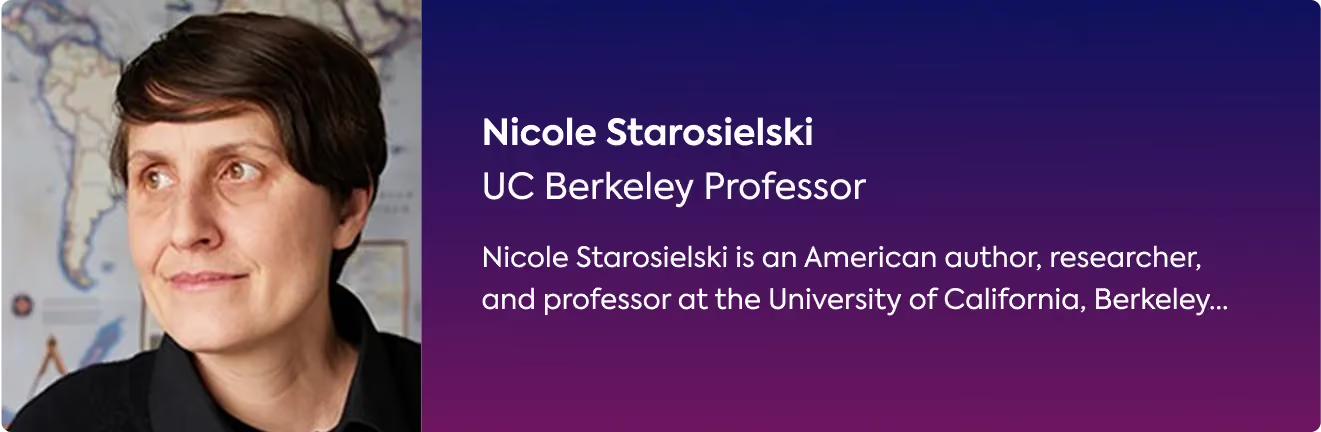
- Each course runs for six weeks and is led by UC Berkeley Professor Nicole Starosielski, featuring guest lectures from industry leaders.
- Courses are for undergraduates and beginning university students (ages 18–25), with no prior experience required.
- All courses will be noted on UC Berkeley transcripts and may be transferable to other universities.
FAQ
Digital infrastructures are the physical installations that support the transmission, storage, and computation of data. Digital infrastructure underpins all Internet operations today. These infrastructures include data centres—which range from small edge facilities to expansive hyperscaler operations. They also include subsea fibre-optic cables that transport over 99% of all international data traffic. The course will cover the technology development of subsea fibre along with the complexity and challenges of the marine operations of installation, repair, and maintenance. Terrestrially, Internet traffic is supported by fibre-optic cables that run underground or are strung between utility poles. At interconnection facilities–often housed in a data centre–networks are interlinked. The course will include discussions about IXPs, POPs, caching and peering.

It is typically only in the last hop to the end-user that digital transmissions become wireless. The courses in this program will cover some of these wireless infrastructures, including cellular, microwave, and satellite. These systems will be considered in relation to the global backbone of the Internet and transforming digital architectures enabled by 5G and AI. While LEO satellites will be discussed, these systems have nowhere near the capacity of subsea systems.
These courses will give you an overview of technology, but they are intended to be accessible to all disciplines. We believe that, since everyone is dependent on the Internet, there should be education that enables anyone—from a journalist to those interested in working in government—to understand what’s going on beneath the interface.
This certificate is a program in global digital infrastructure. The curriculum is developed not only by scholars in the United States but will include contributions and case studies from around the world.
Master’s Level 2 in Digital Subsea Infrastructure: Master the Depths of Global Connectivity
An Elite Partnership
This pioneering program is a major joint initiative brought to you by the industry leaders and academic pioneers shaping the future of global data pathways:

%201.webp)

2nd Level Master Program University of Genoa, Italy
The II Level Master in Digital Subsea Infrastructure (DSI) is an
intensive, 12-month post-graduate program designed to train the
next generation of professionals capable of planning, designing,
and managing complex underwater digital pathways.
This advanced II Level Master's degree is explicitly tailored for
high-achieving individuals looking to spearhead the submarine
cable industry.

Program Overview
Flexible Format
Completely online, real-time synchronous lectures (no recordings)—giving you the flexibility to study from anywhere while maintaining active, live engagement.
Curriculum
A unique, multi-disciplinary blend of Science, Engineering, ICT, Business Administration, and Law of the Sea.
Total Commitment
1,500 hours (60 ECTS credits), including 420 hours of synchronous lectures and 450 hours dedicated to a practical project work/final dissertation.
Admission Requirements
You must hold a Master’s degree (M.Sc.) or an equivalent 5-year degree (EQF Level 7) in a relevant discipline, such as Engineering, Physics, Economics, Law, or Political Science. A B-2 level English proficiency is also required (for non-native speakers).
Tuition & Funding Options
Tuition is structured based on your employment status and whether your company is an official partner of the program.
Partner & Sponsor Companies
Non-Partner Companies
Independent / Unemployed Students
Key Dates for the First Edition
Applications Open
July 10th – November 3rd, 2026
Selection Process
November 3rd – December 10th, 2026
Program Starts
December 22nd, 2026
Applications Open
July 10th – September 30th, 2026
Selection Process
September 30th – October 29th, 2026
Program Starts
November 15th, 2026
Ready to Apply?
The application, registration process, and full institutional details are managed securely through the University of Genoa portal.

Past Educational Initiatives
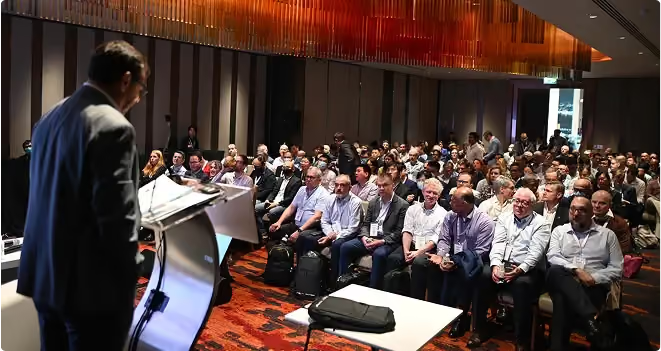
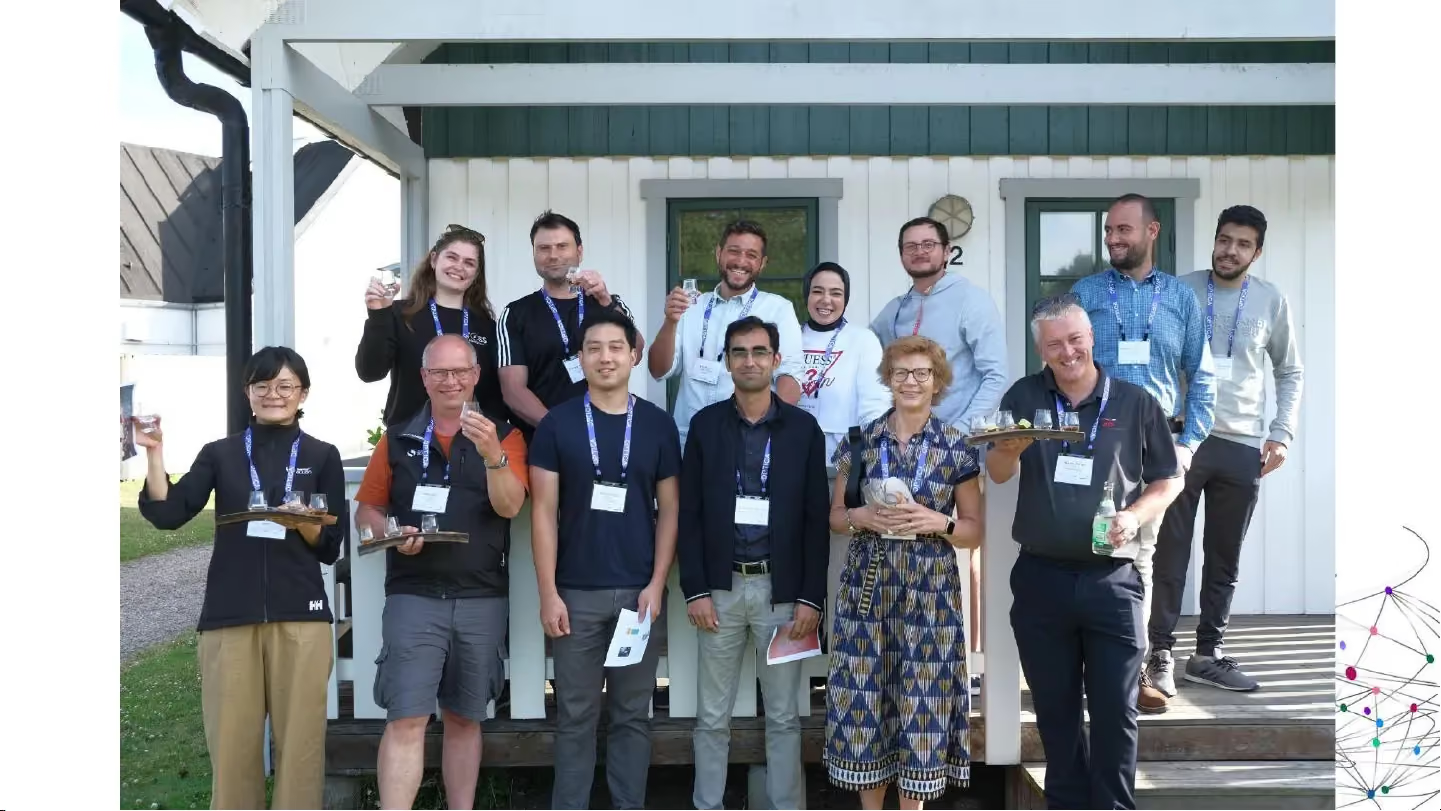
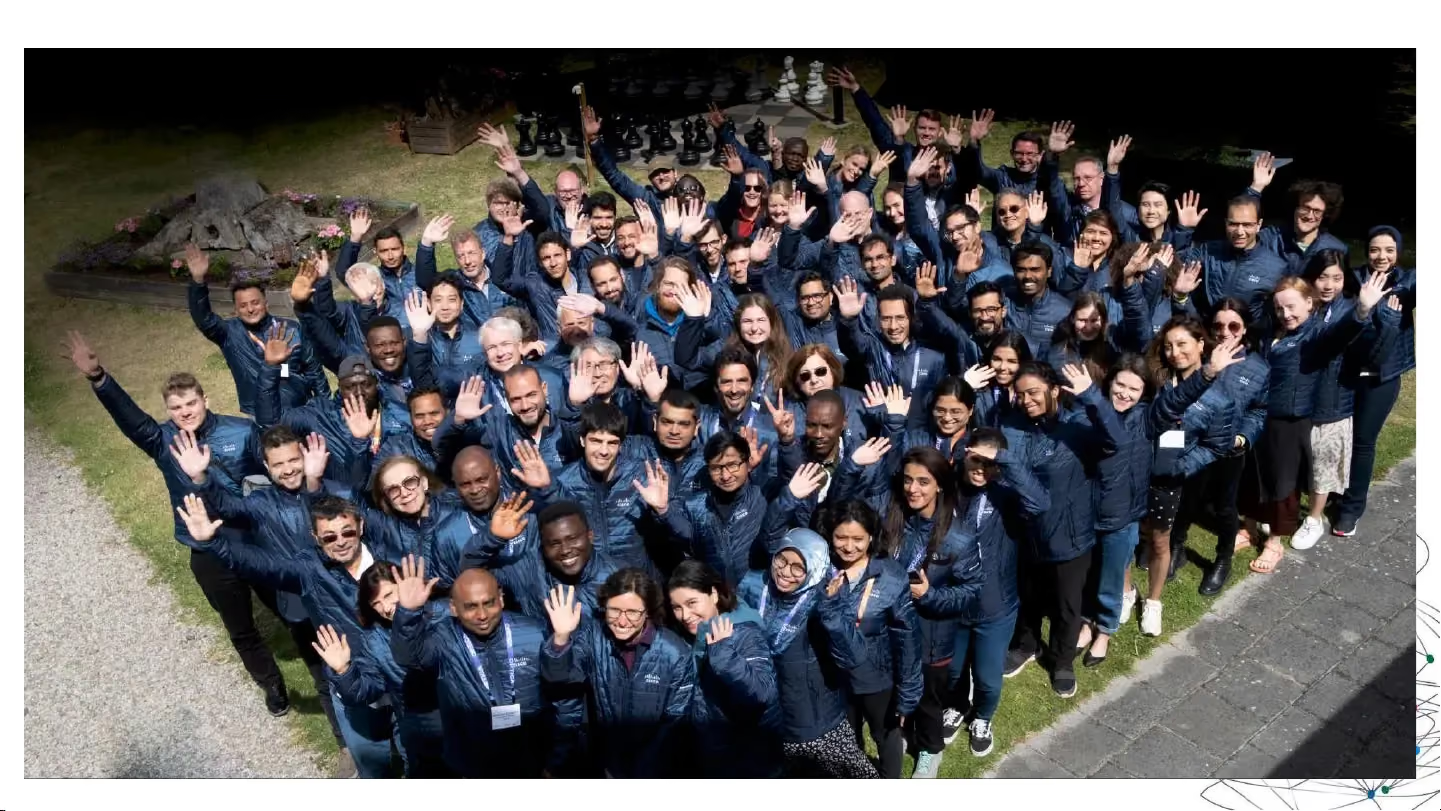
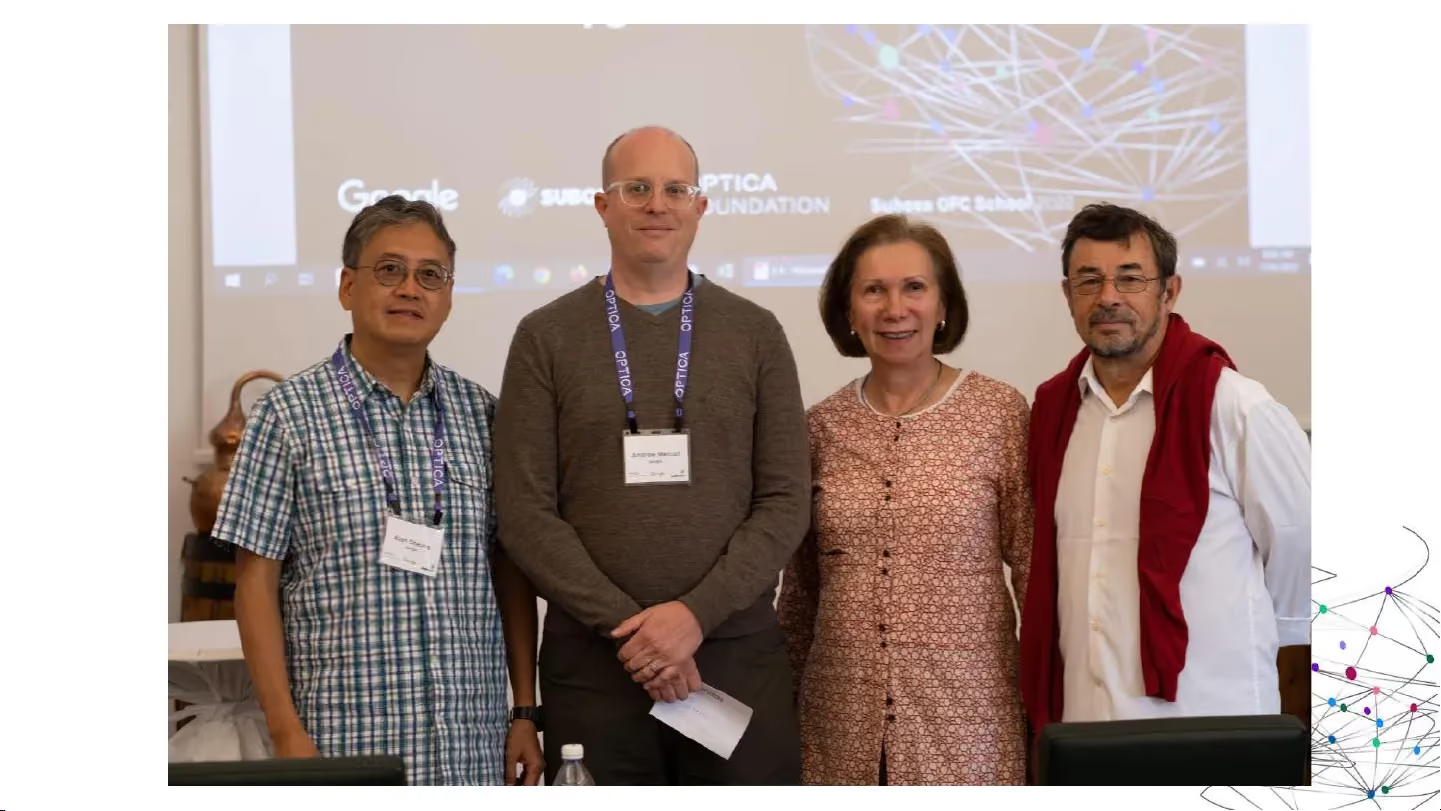
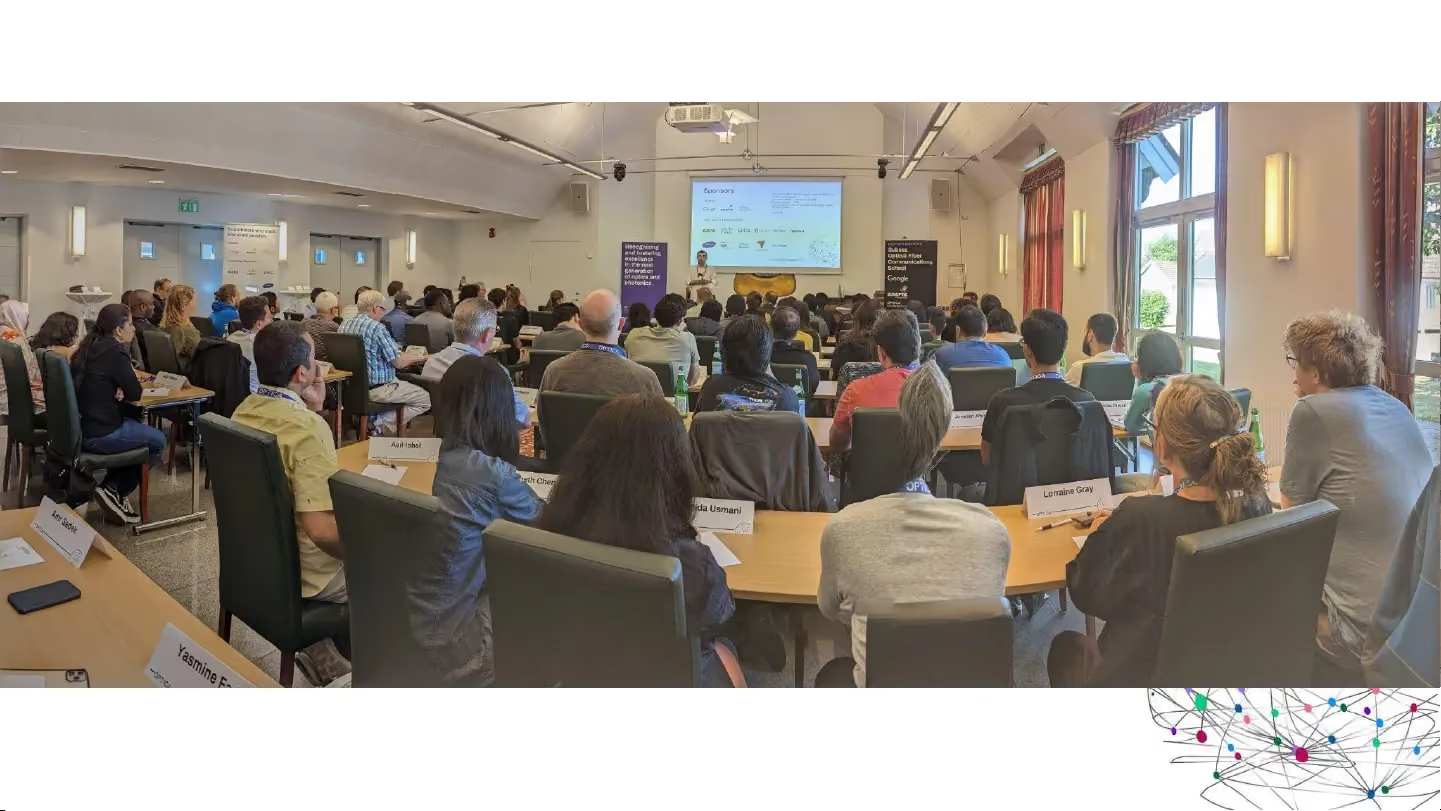
Between 2019 and 2022 SubOptic, in partnership with Google and Optica, held three editions of the Subsea OFC School; an opportunity for PhD students and early career professionals to learn more about the subsea industry and how to join it.
The below images are from the 2022 event in Sweden which attracted 58 attendees representing 23 different countries.
Be Part of the Change
Find out how you can support the SubOptic Foundation
- Students: Apply now to join the next generation of industry leaders and shape your future in the submarine cable industry.
- Supporters: You can support the Foundation in multiple ways, including a donation of time, money, or expertise.

Upcoming Industry Events
Networking opportunities with industry leaders
Discover the Latest News
Stay informed with our latest blog posts and news articles.